
NDC Tolon Communications Officer Raises Concerns Over Some 24-Hour Economy Markets
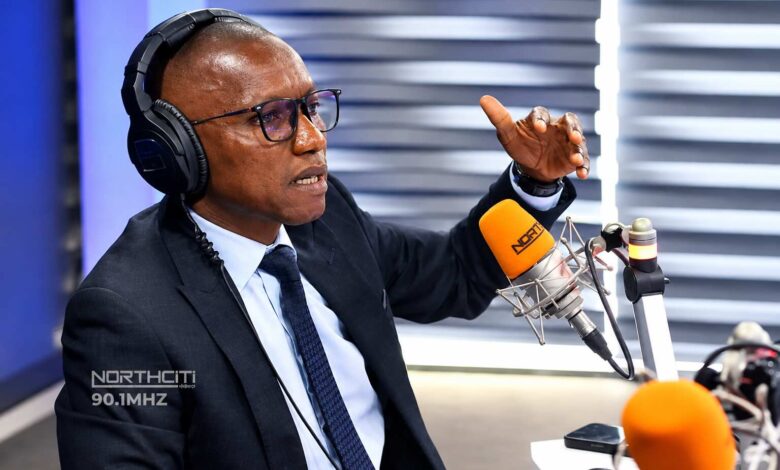
The NDC Communications Officer for the Tolon Constituency, Dr. Seidu Fitter, says some of the 24-hour economy markets being constructed by the government across Metropolitan, Municipal and District Assemblies, MMDAs, are necessary, while others may not be needed.
Speaking on NorthCiti Breakfast Avenue earlier today, Dr. Fitter said the government’s market programme could support local economic activity, but the projects should respond to the needs of communities.
“In my opinion, some of the markets are not necessary. Some, in my opinion, are not. I agree some are not,” Dr. Fitter stated in response to a question if the 24-hour economy markets are necessary.
The 24-hour economy market programme is being rolled out across the country, with the government describing the facilities as multi-purpose economic centres that will include services such as banking, security, fire protection and clinics.
Dr. Fitter cited Nyankpala in the Tolon Constituency as one area where a new market is needed, describing its existing market as one of the biggest in the constituency.
He, however, questioned the need for several market projects within parts of the Sagnarigu area, given the number of existing trading centres.
Dr. Fitter also explained that a market does not necessarily have to be a permanent structure.
He also cited Katanga and Guunaayili markets as examples, saying people can trade successfully in open spaces without shops or stores.
“Market is where people converge to buy and sell. It could be a bare floor, go to Katanga Market, one of the biggest markets in West Africa. But there are no stores. There are no shops, but they buy, they sell. In fact, on Katanga market day, the Tolon Road is very busy because people go there to buy. So, my definition of market is not a structure. My definition of market is, it can even be a bare floor, even under trees, as people come and buy,” Dr. Fitter observed.

The NDC Communicator noted that the government’s 24-hour market model goes beyond trading spaces and includes facilities such as banks, police and fire stations, clinics and schools. However, he expressed concern about the location of schools within market facilities, saying noise from trading activities could affect teaching and learning.
He also welcomed the employment opportunities created during the construction of the markets, saying artisans such as masons, carpenters and other workers would earn income from the projects.
The Local Government Ministry says the 24-hour market initiative is intended to support local economic development, reduce congestion and create economic hubs that can operate around the clock.
Story by Sulemana Abubakari Sadiq